

Iran Utilizes Asymmetric Hack Attacks to Trigger Trump's Delusional Narcissism and Domestic Polarization -Expose Munition Attrition

Across the landscape of modern asymmetric warfare, the ultimate objective of statecraft is not merely the destruction of an adversary’s physical hardware, but the total neutralization of its strategic command structure.
In the case of Washington’s escalating confrontation in the Persian Gulf and Eastern Europe, Iranian national security strategists—supported by specialized psychological, intelligence, and cyber units—have operationalized a calculated campaign aimed directly at the executive branch.
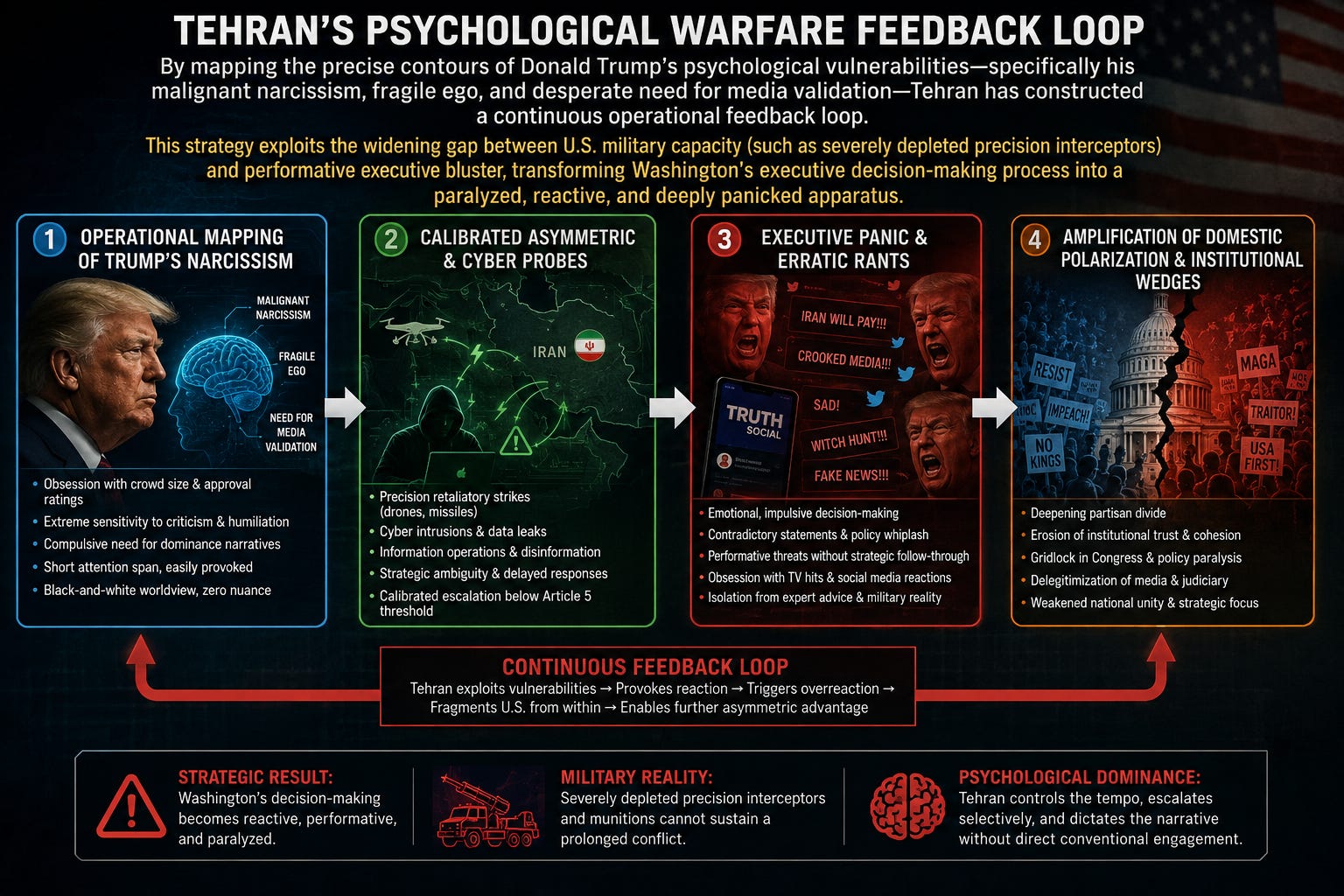
By mapping the precise contours of Donald Trump’s psychological vulnerabilities—specifically his malignant narcissism, fragile ego, and desperate need for media validation—Tehran has constructed a continuous operational feedback loop.
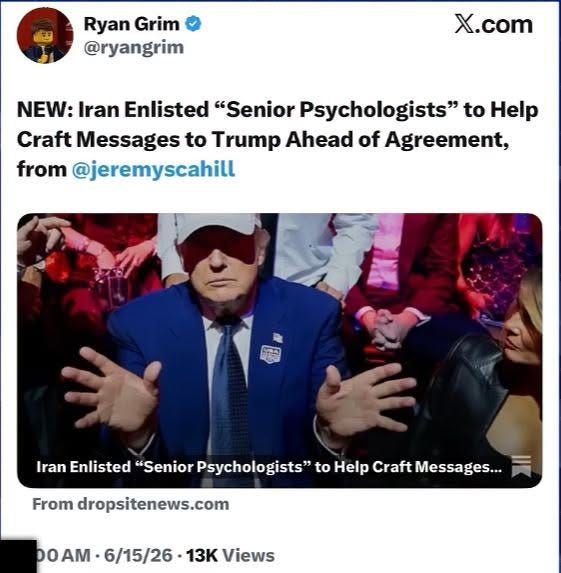
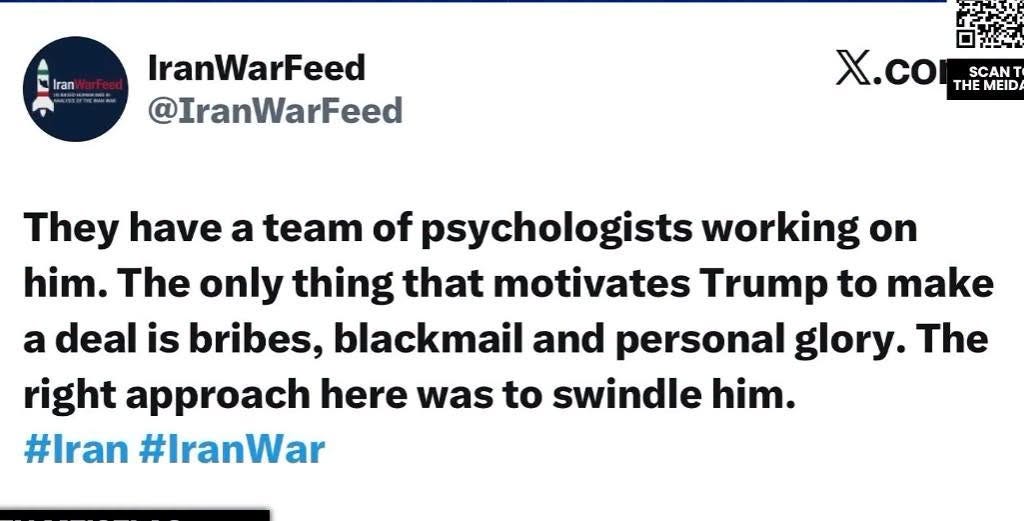
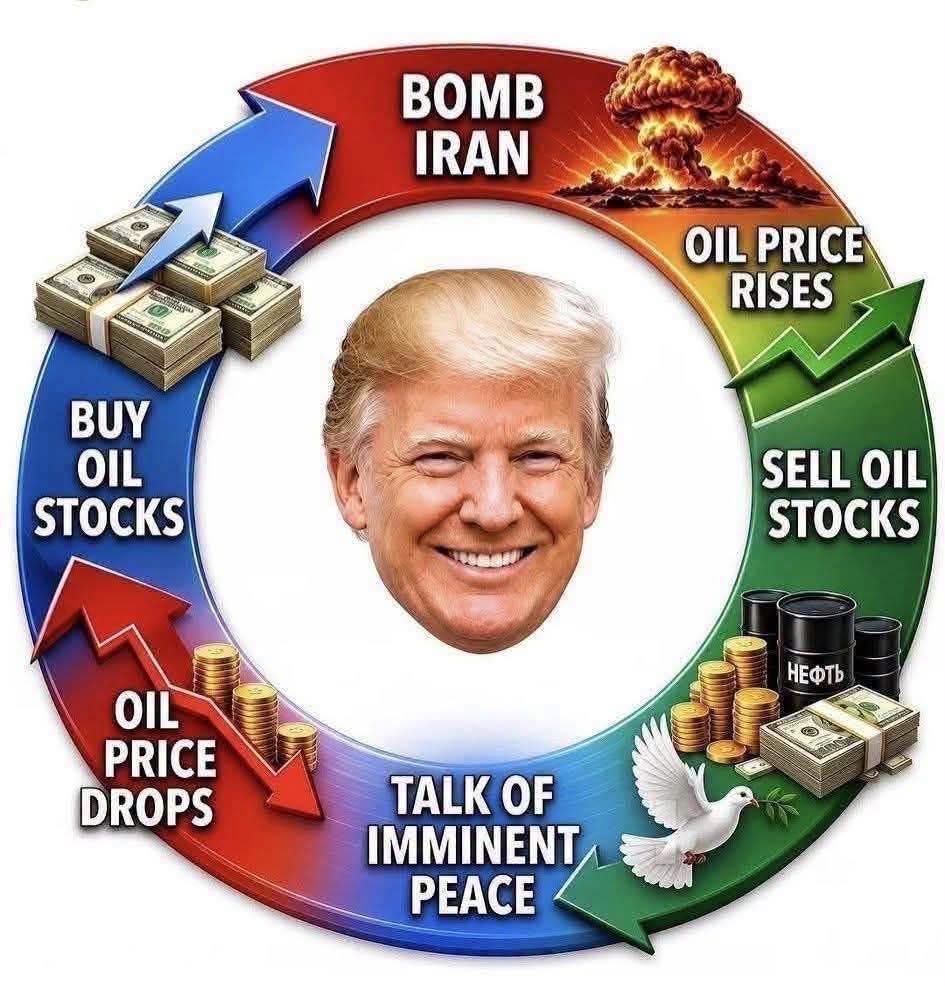
This strategy exploits the widening gap between U.S. military capacity (such as severely depleted precision interceptors) and performative executive bluster, transforming Washington’s executive decision-making process into a paralyzed, reactive, and deeply panicked apparatus.
1. Asymmetric Cyber Probes: Engineering Domestic Wedges
A primary example of Tehran’s psychological campaign is the strategic selection of cyber targets within the United States.
Rather than deploying cyber capabilities exclusively against federal military networks, Iranian-aligned hacking collectives (such as Handala) executed high-visibility probes against municipal infrastructure—specifically targeting municipal water systems in Minnesota.
Exploiting Executive Animosity: Strategic analysts recognize that the U.S. executive holds deep political grievances against specific domestic states and urban centers. By targeting infrastructure in Minnesota, Iranian cyber strategists correctly predicted that instead of presenting a unified national defense posture, the White House would publicly attack local state leadership, calling them “grossly incompetent.”
Systemic Division at Zero Kinetic Cost: A low-intensity cyber intrusion yielded massive strategic returns: it triggered media coverage, exposed internal communication fractures between state and federal intelligence agencies, and induced a public executive outburst that further alienated domestic populations during an escalating foreign crisis.
2. Calibrated Attrition: The “Malaria Mosquito” Strategy and Munition Depletion
On the kinetic front, Iranian operational planning relies on a calculated strategy designed to drain Western air defense stockpiles while maximizing psychological friction in the Oval Office.
Forcing High-Cost Interceptions: By launching small, calibrated salvos of liquid-fueled ballistic missiles or low-cost Shahed drones against forward U.S. positions in Jordan and Iraq, Iranian forces force U.S. air defense batteries to expend multi-million-dollar interceptors (THAAD and PAC-3 MSE).
Pushing Defense Stocks into Crisis: As military planners and mainstream reports acknowledge, U.S. interceptor stockpiles have entered a critical exhaustion zone. This munition deficit directly constrains Washington’s ability to support secondary proxy theaters, such as Ukraine, while leaving forward operating bases in the Middle East increasingly vulnerable.
Triggering Executive Frustration: Knowing that the administration operates on immediate television cycles, Tehran uses sudden, limited strikes (such as hitting Muwaffaq Salti Air Base in Jordan) to shatter White House claims that “Iran is ready to surrender.” This forces the executive into loud, profane media rants (”We are going to blow the f*** out of them”), which are immediately followed by quiet operational stand-downs when military commanders brief him on real-world munition limits.
3. The Psychological Seesaw: Exploiting the Bluster-Retreat Cycle
Iranian negotiators and intelligence teams have mapped the executive’s habit of swinging between extreme threats and desperate pleas for deal-making.
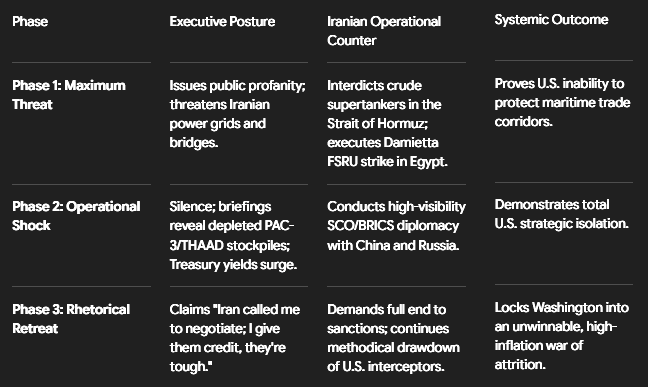
The ongoing crisis in the Persian Gulf illustrates the total failure of performative, unscripted statecraft when confronted by a disciplined, realpolitik-driven adversary.
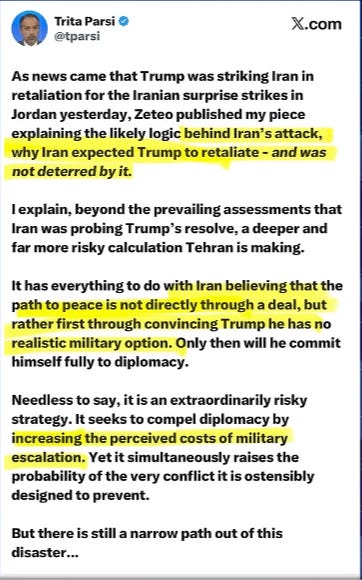
By systematically targeting the executive’s psychological defects, exploiting domestic political divisions, and enforcing a brutal industrial war of attrition on U.S. air defense stockpiles, Tehran has achieved operational dominance without engaging in an all-out conventional war.
As U.S. precision munition reserves dwindle and global energy spot markets remain volatile, the White House finds itself trapped in a psychological and strategic corner—proving that no amount of social media threats or media profanity can substitute for industrial capacity and coherent statecraft.
How Trump's Inherent Weakness, Messianic Ego, and Political Cowardice Drove Dual Escalations in Ukraine and Iran

In the history of American executive statecraft, few foreign policy disasters have been as completely self-inflicted as the dual strategic crises facing Donald J. Trump. Having built his political platform on promises to act as an unyielding, anti-interventionist “peacemaker”—boasting he would dismantle the foreign policy establishment, broker an immedi…